In the case for our group, coming up with the script and characters took some time, we tried our best to not overdo the skit and be straight to the point. Deciding how to present to the audience our front and back stage was also one of the points we need to consider.
After the entire skit performance by the class, it was interesting and surprising to see the many variations each group had come up with to present the front and back stage. Some used flashlights and big cards, all used differently but effectively too.
Overall, the skits do enhance my understanding theories in performance and definitely, it relate to each and every one of us. We all do self-talk with ourselves, and this thinking let us make decisions, affecting what we do in the front stage. Everyone needs to have their backstage to vent their feelings.
Working part time as a customer service officer, it is not surprising that everyone always talk or gossip about any difficult or weird customers. I believe that if we were to keep our feelings to ourselves, sooner or later, we might feel that we cannot continue our job anymore. In other words, in order to maintain our front stage performances, we cannot live without our back stage. Personally, I am someone who can embrace and reject change depending on what needs the change. In fact, I like to have a routine for certain things that I do. Take for example, the standard procedure that I have to do when I wake up every morning. Even when doing simple housework, like vacuuming the floor, I had to start with the kitchen first, always. I have this feeling that things will go wrong if I do not follow my routine.
However, sometimes I do like changes too. When it comes to working, I know that I am not able to stand doing office hours. Every Monday to Friday, 9-5pm, just gives me the impression of how bored it will be. Instead, I would prefer jobs that are always dealing with different people and maybe one that does shift work. I find that this way can actually make me stay in a job long enough. This is way i still enjoy working as a customer service officer, I always do get to meet different people, whether they are friendly or not. It gives a sense of novelty as compared to sitting in your own cubicle and keeping to yourself. I personally feel that couples in a relationship are more likely to experience relational dialectics. Normally, when things become too predictable, too routine or boring in a relationship, they start to crave novelty. Once in a while, normally the girls, would want a surprise from the guy. And if no surprises were given, one of them (normally the girls too), would start to rant how the relationship is a standstill etc. This is an example of how people want stability and also change at the same time.
Wednesday, October 21, 2009
Entry #2

Monday, September 28, 2009
Entry #1
Take for instance, my grandparents' marriage was arranged. During the era which they grew up in, women by the age of 16 had to get married and if still single in their twenties, they were labeled as being 'left on the shelf'. They had no say on who they want to spend the rest of their life with as it was the norm for women to get married that way. We can see that, in these social conditions, a woman's free will was constrained.
And now, the younger generation, some called it the Generation Y, are caught in this phenomena called the 'paper chase'. In this society, qualifications become the utmost importance of most students. Students' lives are so caught up with studies, examinations and aiming for the best college or university to get into. These people are being 'thrown' into the world we live in, having the belief that getting a degree is a one-way ticket to a better life in the future. Even I for example, make choices differently when I'm at work and when I'm not. My job scope involves customer service and inevitably, there are always difficult customers. When these people ask me the most atrocious requests, I can not tell them I have no idea what they are talking about. Being in my work environment, I have to abide by the rules that customers are always right, and I am there to help them. I do not have a choice of telling customers "I don't know".
I do support the concept of thrownness; that people are restricted by the society they live in to freely make whatever decisions they want. Somehow or other, they are still being bound by the culture and norms that make them unable to make a choice freely. I believe every one of us experienced this before. How we tend to act and make choices differently depends on the environment we are in. It is very interesting how each different place have their unique culture and rules that one follow without any doubt. When you are at work, you behave professionally and do things that are culturally accepted in your office. When you are at school, your actions and choices are made based on what the school expects from you.
Although I’m a student of Communication, I am still awed by the fact that advertising plays such an important role in our daily lives and even I am still susceptible to it. I suppose this is one example in which people assign meanings to symbols too. Logos are just pictorial expressions that every company has but we are able to associate it with each company if we are exposed to them often.
The Formula 1 fever is here over the weekend and Channel 5 has an exclusive coverage on the event. The first thing I noticed on TV was the huge amount of advertising effort put into this. Everywhere, I see logos of various companies. If they can afford more money, they get bigger spaces and bigger logos. Race cars are painted or pasted with the logo of companies they represent and not to mention the helmets of racers (which I heard is one of the most expensive advertising spaces), and on the thick astronaut-like uniform that they wear.
During an interview with Lewis Hamilton, he was seen wearing a red 'Vodafone' cap. How he continuously tried to wipe off his perspiration and still, with the obligations of his sponsors, have to keep the cap and suit on, showed just how much advertisers want their logos to be seen with him.
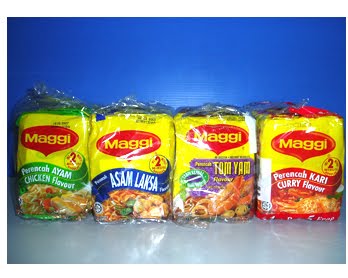
As learnt, symbols are arbitrary, they hold no relationship to what they stand for but whenever we see a familiar one, we are still able to link it to what we thought it represent. In Singapore, some symbols are so common that we use it to replace the actual name for things we use. Colgate is a well-known brand for toothpaste here, and someone looking for it would say 'Colgate' instead of toothpaste. Same goes for 'Maggie Mee', which actually meant instant noodles. Symbols are interesting, and what's even more interesting is how we attach meanings to them.